
Time shapes every moment we experience, yet its essence is elusive and often paradoxical. Physicists have long struggled to unravel time’s secrets, discovering ideas that stretch far beyond common sense. From the relativity of simultaneity to puzzling quantum effects, the study of time continually transforms our understanding of the universe.This article invites you on a journey through 15 astonishing concepts about time, each one revealing how reality is often stranger than fiction. Prepare to rethink everything you thought you knew about the ticking of the cosmic clock.
1. Time Dilation
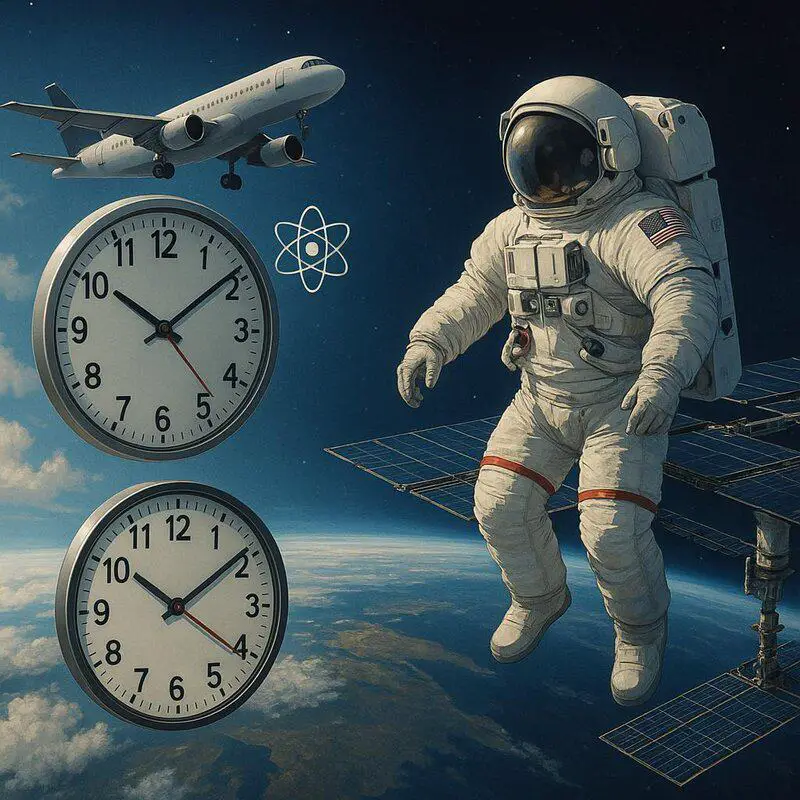 Illustration of time dilation: moving clocks run slower, as confirmed by atomic clock experiments. Photo by: ChatGPT
According to Einstein’s theory of relativity, time doesn’t tick at the same rate for everyone. When an object moves quickly—especially near the speed of light—time actually slows down for it compared to a stationary observer. This effect, known as time dilation, isn’t just theoretical: atomic clocks flown on airplanes have run slower than identical clocks on the ground. Even astronauts aboard the International Space Station age minutely less than people on Earth. Read more at NASA.
2. The Arrow of Time
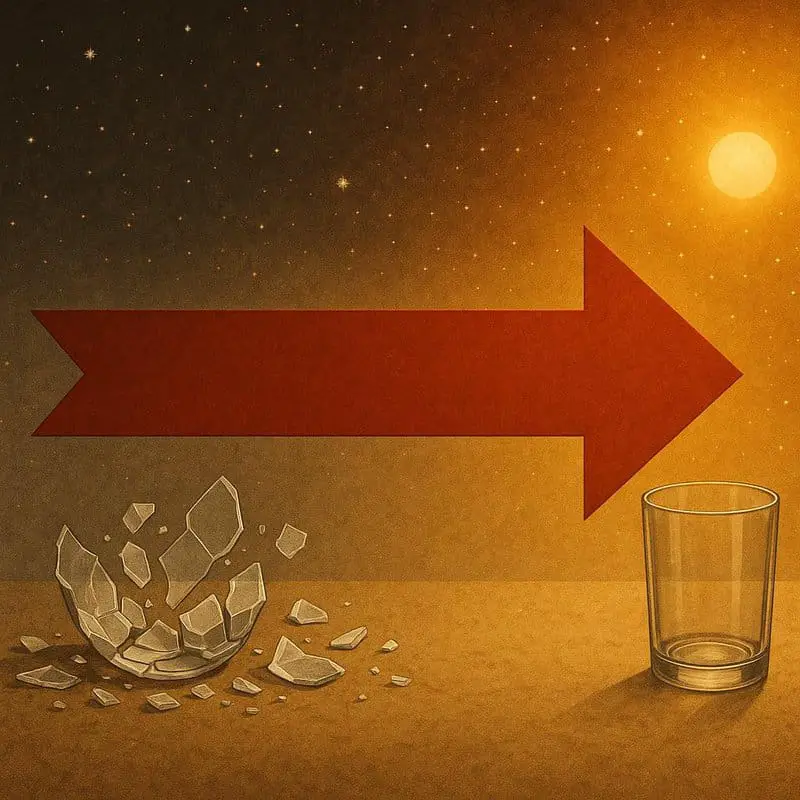 The relentless arrow of time: entropy drives irreversible change, shaping the universe’s unfolding story. Photo by: ChatGPT
Although the fundamental laws of physics don’t care which way time flows, our experience tells a different story. The arrow of time points relentlessly forward, a direction defined by the universe’s ever-increasing entropy or disorder. A shattered glass never leaps back together, highlighting this irreversible march. This one-way journey shapes everything from aging to the fate of stars. Learn more at Scientific American.
3. Time as a Dimension
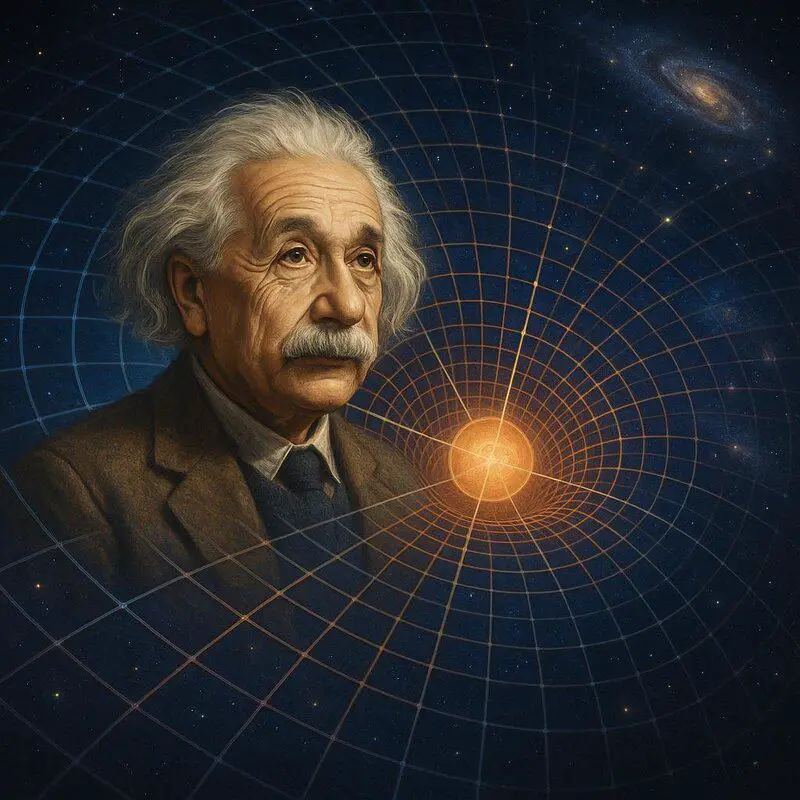 Einstein’s spacetime unites space and time, redefining reality as a four-dimensional continuum. Photo by: ChatGPT
Einstein revolutionized physics by introducing time as the fourth dimension, seamlessly blending it with the three dimensions of space into what’s called spacetime. Events aren’t just “here” or “there”—they’re also anchored by “when.” This concept transforms our idea of past, present, and future into coordinates on a universal map. The very fabric of reality is shaped by this interplay. More at Space.com.
4. Time Travel Paradoxes
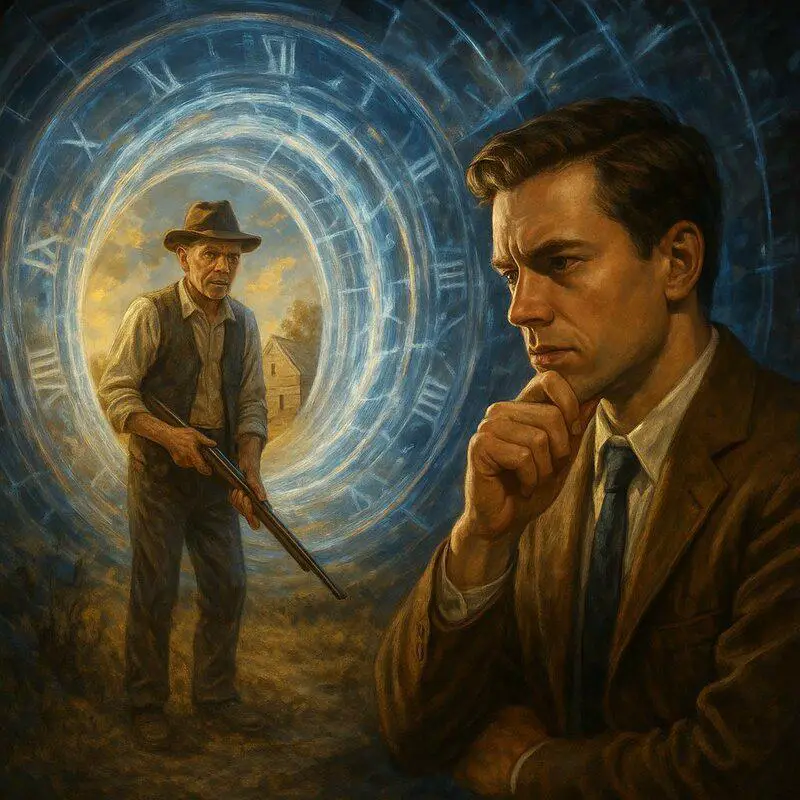 Exploring time travel paradoxes challenges our understanding of causality and the nature of reality. Photo by: ChatGPT
The idea that time travel could be possible sparks some of the most mind-bending paradoxes in physics. One famous example is the grandfather paradox: if you traveled back and prevented your own ancestor from existing, what would happen to you? These curious scenarios force us to question the nature of causality and reality itself. Explore more at Live Science.
5. Block Universe Theory
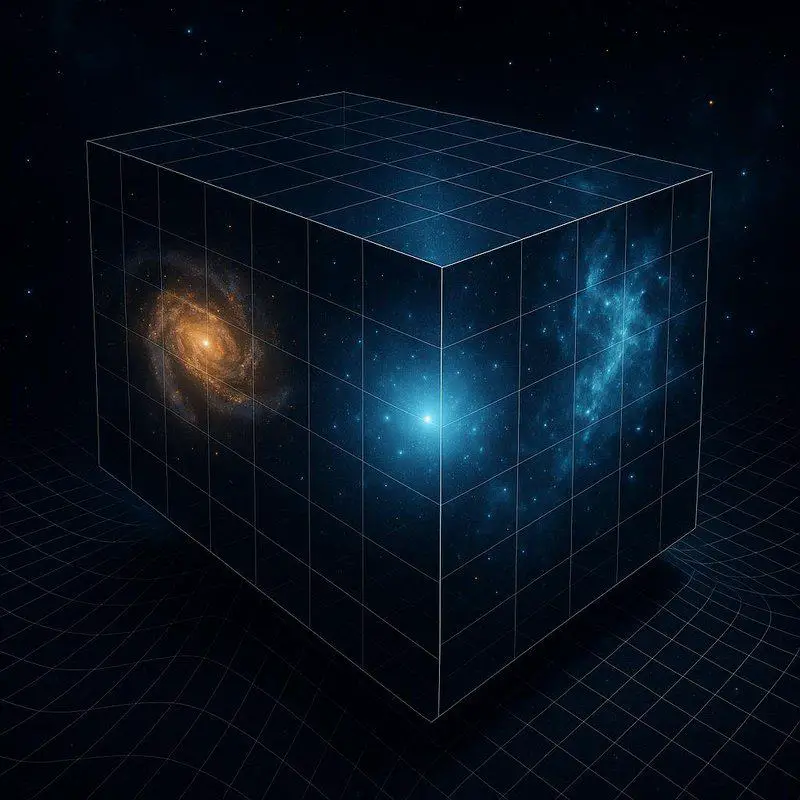 Visualizing the block universe: every moment in time coexisting within a single, unchanging spacetime structure. Photo by: ChatGPT
Imagine a universe where every moment—past, present, and future—exists all at once. The block universe theory, also known as eternalism, proposes exactly that. In this model, time doesn’t “flow”; instead, every instant is fixed within a vast, four-dimensional spacetime block. This challenges our everyday sense of the present as uniquely real and suggests that all points in time are equally actual. Explore the concept at the Stanford Encyclopedia of Philosophy.
6. Relativity of Simultaneity
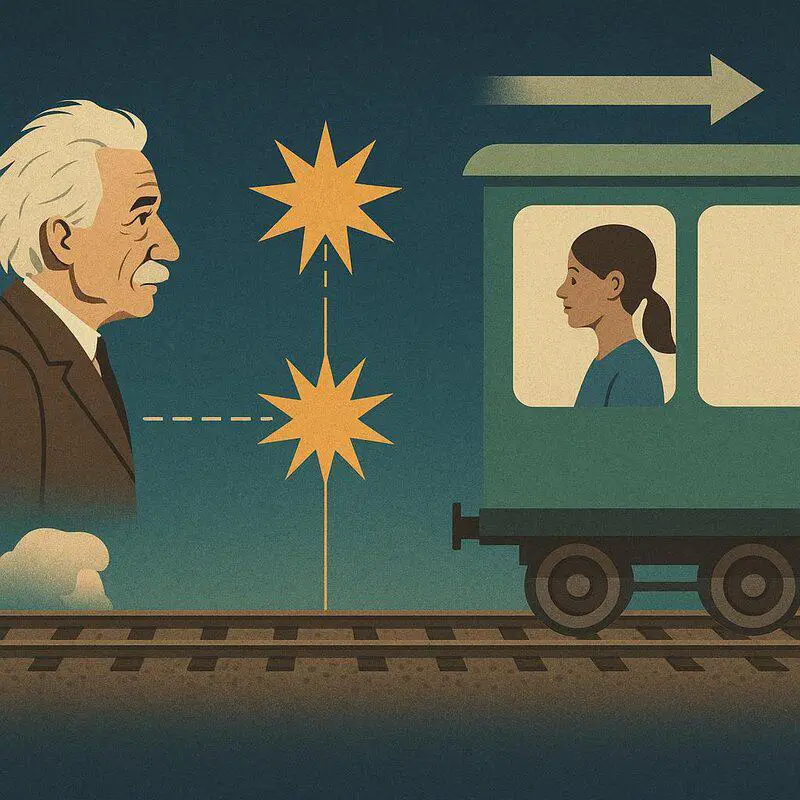 Relativity of simultaneity: Different observers experience “now” differently, reshaping our understanding of time. Photo by: ChatGPT
Einstein showed that simultaneity isn’t absolute. Two events that seem to happen at the same time for one observer might not be simultaneous to someone moving at a different speed. This relativity of simultaneity means there’s no universal “now”—our motion shapes what we perceive as happening together in time. It’s a profound shift in how we think about temporal order. Learn more at Einstein Online.
7. Time Crystals
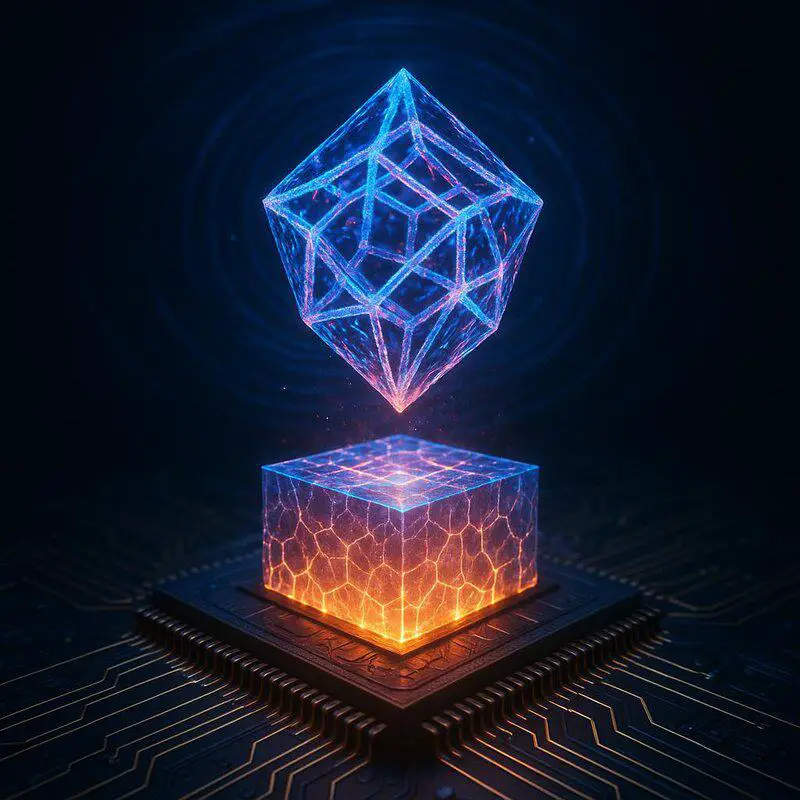 A quantum computer generates a time crystal, revealing oscillating structures that repeat through time and space. Photo by: ChatGPT
Time crystals are a mind-bending new state of matter that exhibit repeating patterns not only in space, but in time itself. Unlike ordinary crystals, their structure oscillates endlessly, defying traditional laws of equilibrium. In 2021, Google researchers successfully created a time crystal on a quantum computer, opening doors to entirely new possibilities in quantum physics. Read more at MIT Technology Review.
8. Closed Timelike Curves
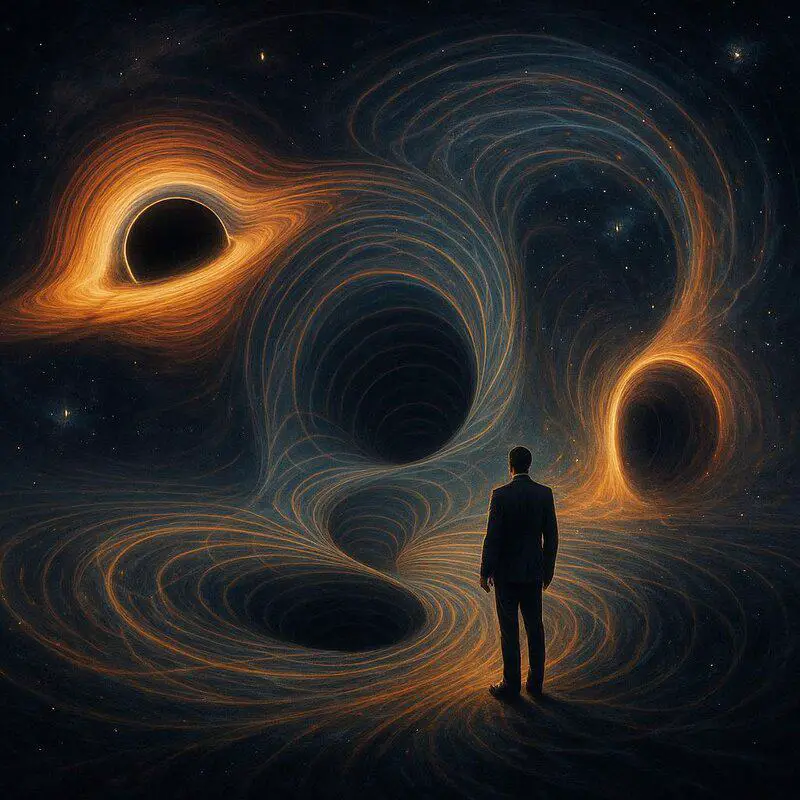 Closed timelike curves: theoretical spacetime loops enabling possible time travel under extreme cosmic conditions. Photo by: ChatGPT
General relativity predicts the existence of closed timelike curves—strange paths through spacetime that loop back to their own starting points. If such curves exist, they could, in theory, allow an object or person to travel into their own past. However, these require extreme and exotic conditions, such as the warped spacetime near rotating black holes or hypothetical wormholes. The possibility remains a tantalizing—and controversial—topic in physics. Learn more at Physics.org.
9. Time and Black Holes
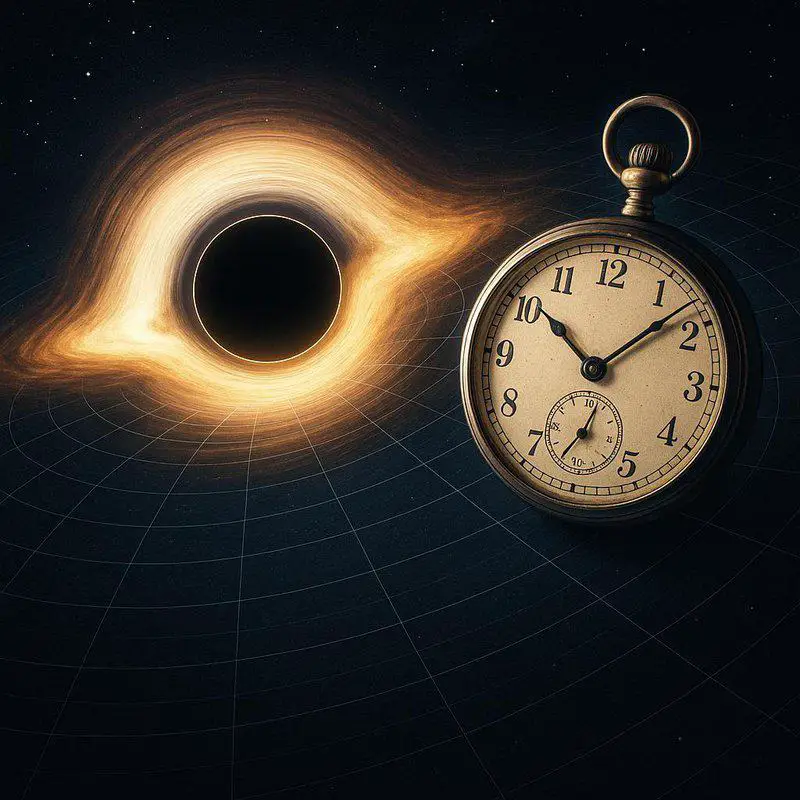 Near a black hole, gravity warps spacetime so intensely that time nearly stops for distant observers. Photo by: ChatGPT
The intense gravity near a black hole distorts spacetime so severely that time slows dramatically as you approach the event horizon. To a distant observer, clocks near the black hole appear to tick almost in slow motion. This phenomenon isn’t science fiction—it’s grounded in Einstein’s equations and was famously visualized in the film ‘Interstellar’. Black holes offer a real-world glimpse into the extreme warping of time. Read more at Scientific American.
10. Quantum Entanglement and Time
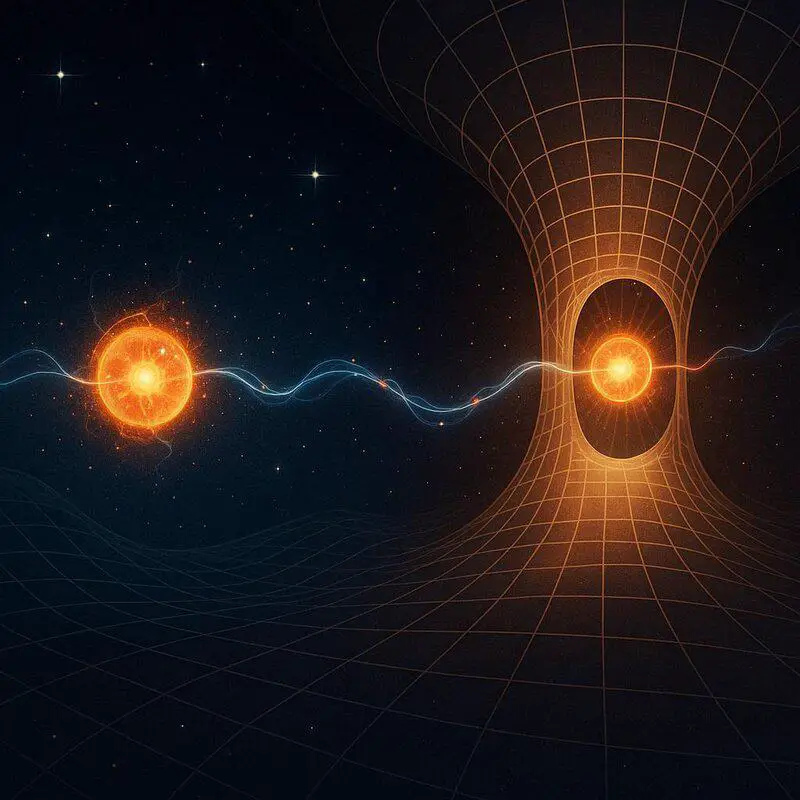 Entangled particles may connect across both space and time, challenging our understanding of causality. Photo by: ChatGPT
Quantum entanglement is famous for linking particles across vast distances, but some theories suggest this mysterious connection could also bridge moments in time. If true, entangled particles might share information not just instantly across space, but also across time, hinting at hidden layers of reality. This deep, non-local connection challenges our basic assumptions about cause and effect. Explore more at Nature.
11. The Presentism vs. Eternalism Debate
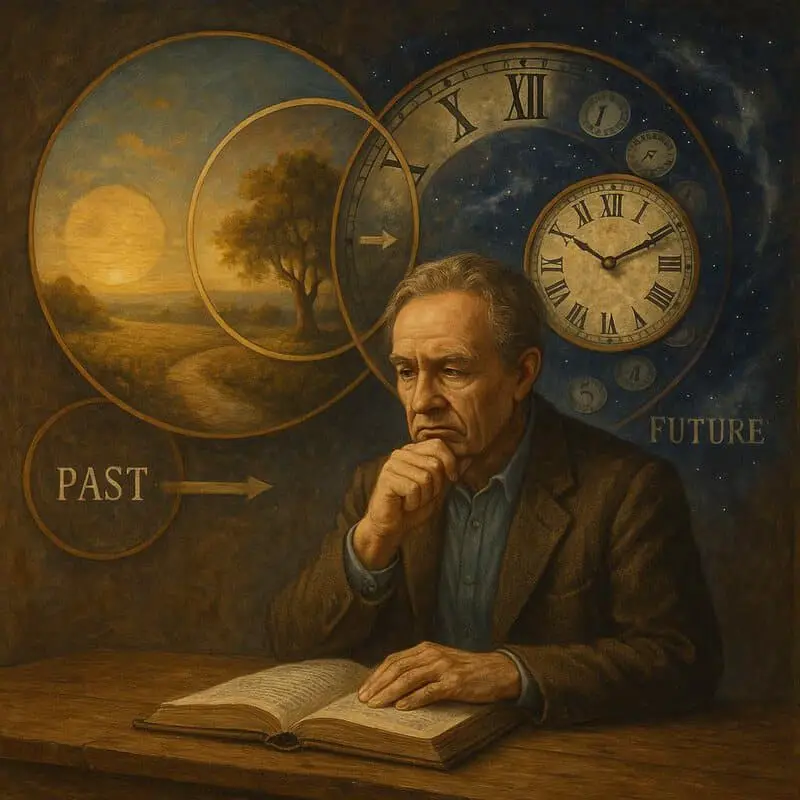 Presentism versus eternalism: debating the true nature and existence of time in philosophy and physics. Photo by: ChatGPT
A central debate in the philosophy of time is whether only the present is real (presentism), or if the past and future exist just as vividly (eternalism). Physics, especially relativity, often points toward eternalism, yet our everyday experience feels strictly presentist. This ontological puzzle delves into what it truly means for time to ‘exist’ and shapes our understanding of reality. Read more at Philosophy Now.
12. Time’s Beginning and the Big Bang
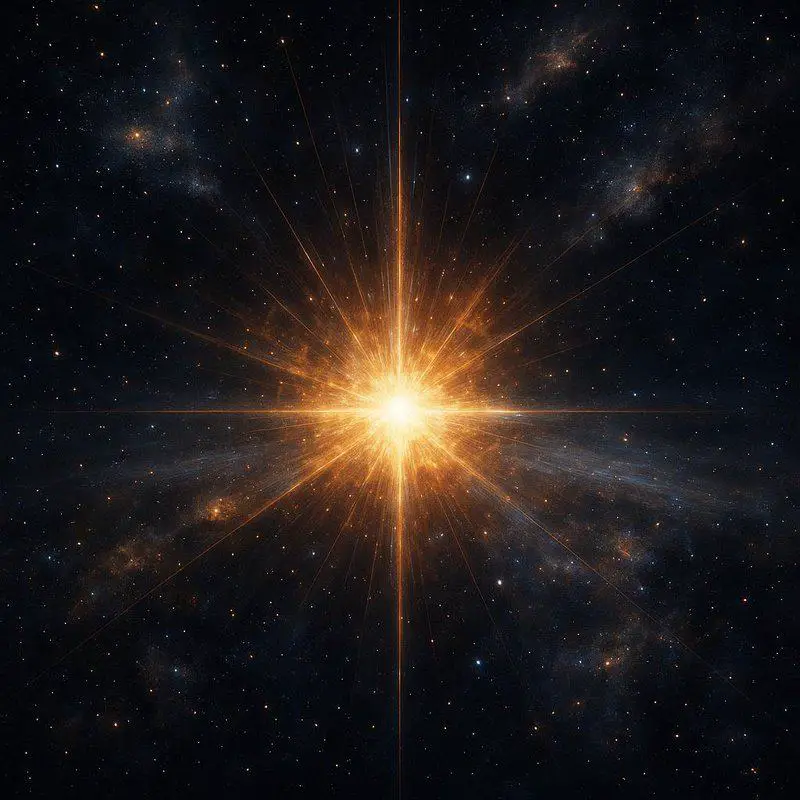 Time and space emerge from the Big Bang, marking the universe’s dramatic beginning 13.8 billion years ago. Photo by: ChatGPT
Modern cosmology proposes that time itself began with the Big Bang, roughly 13.8 billion years ago. Before this event, the very concept of “before” may not even make sense—there was no time as we understand it. This mind-bending idea pushes the limits of both scientific theory and philosophical inquiry. Learn more at NASA.
13. Chronostasis
 A close-up of an eye observing a classic wall clock, capturing the link between visual focus and time perception. | Photo by NULL NULL on Pexels
Chronostasis, also known as the ‘stopped clock illusion’, occurs when the first moment after you move your eyes seems to stretch in time. This curious effect reveals how our brains actively piece together a seamless flow of experience, even fabricating extra time when needed. It’s a reminder that our perception of time is as much a mental construct as a physical reality. Read more at BBC Future.
14. Time Loops in Quantum Physics
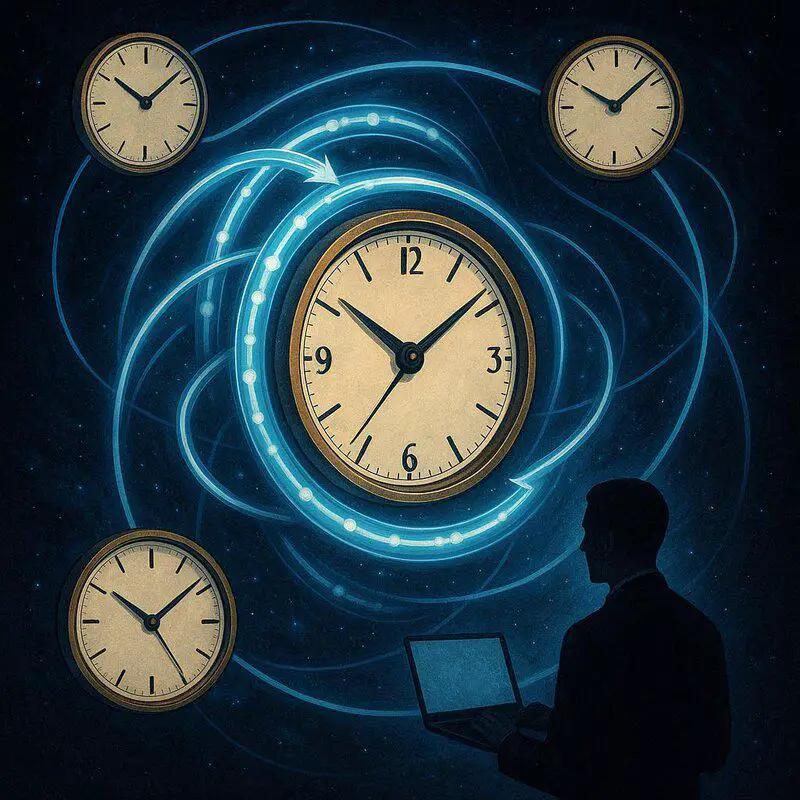 Quantum time loops challenge causality, offering new possibilities for computation and information theory. Photo by: ChatGPT
Certain interpretations of quantum mechanics suggest the possibility of time loops, where actions in the present could affect outcomes in the past. Though these loops remain theoretical, they’re gaining attention in quantum computation and information theory, where they could enable new forms of processing and communication. If ever realized, such phenomena would radically challenge our understanding of cause and effect. Discover more at Quanta Magazine.
15. The Psychological Perception of Time
 A human brain is fused with a classic clock face, symbolizing the intricate link between time and perception. | Photo by Tima Miroshnichenko on Pexels
While physics treats time as a constant dimension, our minds experience it quite differently. As we grow older, time seems to accelerate; during crises, each moment can feel agonizingly slow. Altered states and emotions stretch or compress our sense of the ticking clock, highlighting the brain’s powerful influence over our perception of time’s passage. Read more at the American Psychological Association.
Conclusion
 Exploring the enigmatic nature of time, where science, perception, and mystery endlessly intertwine. Photo by: ChatGPT
Time remains one of the universe’s most profound and puzzling enigmas. From relativity and quantum paradoxes to the very way we perceive each moment, these concepts show just how mysterious and rich the fabric of time truly is.As science pushes boundaries and fresh discoveries are made, our grasp of time—and reality—will continue to evolve. Stay curious, question the ordinary, and embrace the wonder of what might be revealed next. The journey to understand time is far from over.
.article-content-img img { width: 100% }

Vielleicht interessiert es Sie:
13 Extraordinary Giants Ready to Blow Your Mind! 🌍
10 Chonky Oddities That Will Leave You Speechless! 🤯
9 Unbelievable Absolute Units That Will Leave You Speechless! 🌟
10 Colossal Creatures That Will Leave You Speechless! 🐻
12 Shocking Absolute Units You’ll Have to See! 😲
12 Epic Absolute Units That Will Challenge Your Perceptions! 🔥
Uncover the 11 Ultimate Massive Oddities That Awe! 🌍
9 Unbelievable Oddities That Redefine ‚Massive‘! 🐉💎